
X-Rays
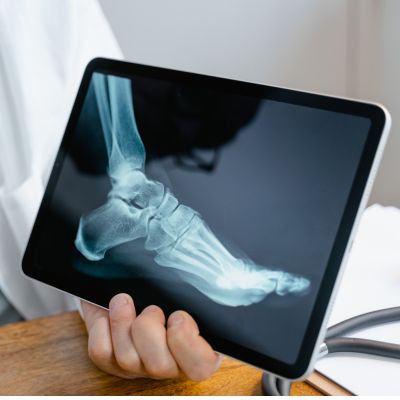
X-rays are an essential diagnostic tool at Dr. Ankur Agrawal’s Sports Injury Center in Bareilly. They help accurately assess bone and joint conditions, especially in cases of arthritis, fractures, and sports-related injuries. Dr. Agrawal uses advanced digital X-ray imaging to provide quick and detailed views of affected areas, allowing for early detection and targeted treatment planning.
During an X-ray session, patients are positioned to capture the clearest image of the injured joint or bone, such as the knee, hip, shoulder, or spine. The procedure is non-invasive, painless, and typically takes just a few minutes. Digital imaging ensures minimal radiation exposure while offering high-resolution results, which Dr. Agrawal reviews in real-time to explain the diagnosis clearly to the patient.
These X-rays help identify joint space narrowing, bone spurs, misalignments, or any signs of degeneration, which are critical in diagnosing conditions like osteoarthritis or sports injuries like ligament tears or fractures. Based on the X-ray findings, Dr. Agrawal creates a personalized treatment plan, which may include physiotherapy, medication, or surgical intervention if necessary.
✅ What Are X-rays?
X-rays are a type of electromagnetic radiation that can pass through the body. When X-rays are directed at a specific body part, they produce images of bones and internal structures on a digital screen or film.
✅ How Do X-rays Work?
Image Creation:
The X-ray machine sends a controlled amount of radiation through the body.Dense structures like bones absorb more rays and appear white.
Soft tissues absorb fewer rays and appear grey or black.
Quick and Painless:
The procedure takes just a few minutes and is completely painless.Analysis:
Doctors analyze the X-ray images to detect issues such as:Fractures or dislocations
Arthritis or bone degeneration
Infections, tumors, or foreign objects
✅ When is an X-ray Needed?
X-rays are needed when a doctor suspects an internal issue involving bones, joints, chest, or certain organs. You may be recommended an X-ray if you have:
Bone injuries such as a suspected fracture, dislocation, or crack
Persistent joint pain or stiffness (e.g., arthritis)
Swelling or deformity after an accident or fall
Back or neck pain to check for spine problems
Chest pain or cough (to detect pneumonia, infections, or lung issues)
Dental issues, such as cavities or impacted teeth
Infections or tumors in bones or soft tissues
✅ Why is an X-ray Important?
Accurate Diagnosis:
X-rays provide a clear image of the affected area, helping doctors diagnose the exact problem quickly.Guides Treatment Planning:
Whether it’s a fracture, arthritis, or lung condition, X-ray results help determine the right course of treatment.Monitors Healing:
X-rays are used during follow-ups to check how well a bone or joint is healing after treatment or surgery.Quick and Painless:
It’s a non-invasive, fast, and cost-effective tool with minimal discomfort.
In short, X-rays are essential for detecting internal problems early, guiding correct treatment, and ensuring better recovery outcomes.