Shoulder Dislocation
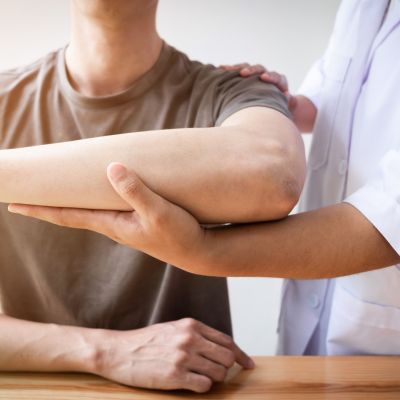
A shoulder dislocation is a painful and often traumatic injury where the upper arm bone (humerus) pops out of the shoulder socket (glenoid). This condition is common among athletes, especially in contact sports or those involving sudden arm movements, but it can also happen due to falls or accidents.
When the shoulder is dislocated, it causes severe pain, visible deformity, swelling, and loss of arm movement. Sometimes, nearby nerves or blood vessels may also be affected, making early diagnosis and treatment crucial.
At Dr. Ankur Agrawal’s Sports Injury Center, shoulder dislocation is treated with a combination of advanced orthopedic techniques and personalized rehabilitation. Initially, the shoulder is gently realigned (reduced) into its normal position. In some cases, especially with repeated dislocations, arthroscopic surgery may be needed to repair torn ligaments or the labrum.
Post-treatment, physiotherapy plays a vital role in regaining strength and preventing future dislocations. Dr. Ankur focuses on comprehensive care, from immediate pain relief to full shoulder stabilization.
If you’ve experienced a dislocated shoulder or suffer from frequent shoulder instability, consult Dr. Ankur Agrawal for expert diagnosis, minimally invasive treatment options, and a smooth path to recovery.
✅ What is shoulder arthroscopy treatment, and How Does It Work?
Shoulder arthroscopy is a minimally invasive surgical procedure used to diagnose and treat shoulder joint problems. It allows orthopedic specialists, like Dr. Ankur Agrawal, to examine the inside of the shoulder using a small camera (called an arthroscope) and make precise repairs through very small incisions.
✅ How Does Shoulder Arthroscopy Work?
Preparation & Anesthesia:
The patient is given anesthesia—local, regional, or general—to ensure comfort.Small Incisions:
Two or three small cuts are made around the shoulder.Inserting the Arthroscope:
A thin tube with a camera is inserted into the shoulder joint. The images are displayed on a screen, allowing the surgeon to see inside the joint in real-time.Diagnosis & Repair:
Specialized tools are inserted through the other incisions to remove damaged tissue, repair tears (like rotator cuff or labrum), or smooth bone surfaces.Closure & Recovery:
The incisions are closed with stitches or bandages. Most patients return home the same day.
✅ When is Shoulder Arthroscopy Needed?
You may need shoulder arthroscopy if you have:
Rotator cuff tears
Recurrent shoulder dislocations
Labral tears or SLAP lesions
Frozen shoulder (adhesive capsulitis)
Shoulder impingement syndrome
Cartilage or ligament damage
Bone spurs causing pain or stiffness
Unexplained chronic shoulder pain not responding to conservative treatment
✅ Why is Shoulder Arthroscopy Performed?
Accurate Diagnosis:
It allows direct visualization of internal joint structures to identify the exact problem.Targeted Repair:
Surgeons can clean, trim, or stitch damaged tissues precisely with minimal trauma.Minimally Invasive:
Small incisions mean less pain, quicker healing, and minimal scarring.Faster Recovery:
Most patients resume daily activities and physical therapy within a few days.Improved Shoulder Function:
It helps restore strength, mobility, and stability.